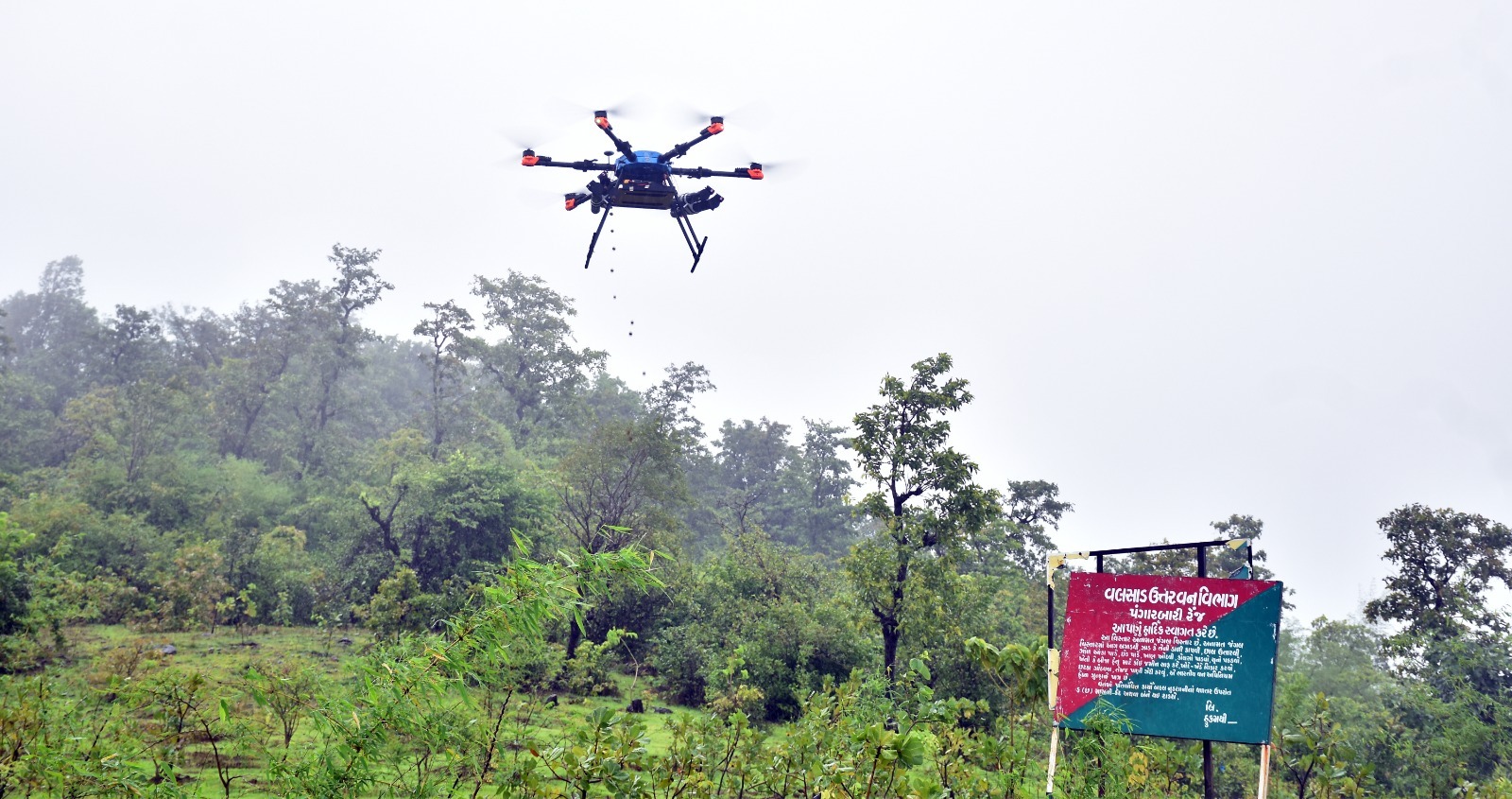
*— A remarkable environmental initiative using drone technology to disperse 50,000 seed balls across inaccessible hills, setting a new benchmark in ecological* *conservation.*
*— First-ever drone-based seed ball dropping initiative in South Gujarat*
 Salonee Patel,Information Bureau: Valsad, 20th July:Neelambhai Patel of Khoba village in Dharampur, through his Lok Mangal Charitable Trust, has emerged as a beacon of community-driven development, making significant contributions to education, healthcare, and environmental conservation. Working in close collaboration with the Forest Department and other organizations, the Trust nurtures more than 50,000 saplings annually through its nursery and undertakes large-scale plantation drives. This year, the organization has combined modern technology with nature to launch an innovative initiative aimed at restoring degraded forests.
Afforestation in rugged hilly terrains and remote forest areas has always posed a significant challenge due to the inaccessibility of such locations. To overcome this obstacle and revive regions where tree cover has diminished considerably, the Trust has adopted an advanced drone-based seed dispersal technique. Around 50,000 seed balls were aerially dispersed over Suliya Hill in Moti Korval and Piprod villages in Dharampur. Significantly, this marks the first-ever drone-based seed ball dropping initiative undertaken in South Gujarat, making it a pioneering milestone in the region’s environmental conservation efforts. With the onset of the monsoon and the support of natural ecological processes, these remote landscapes are expected to gradually transform into thriving green forests.
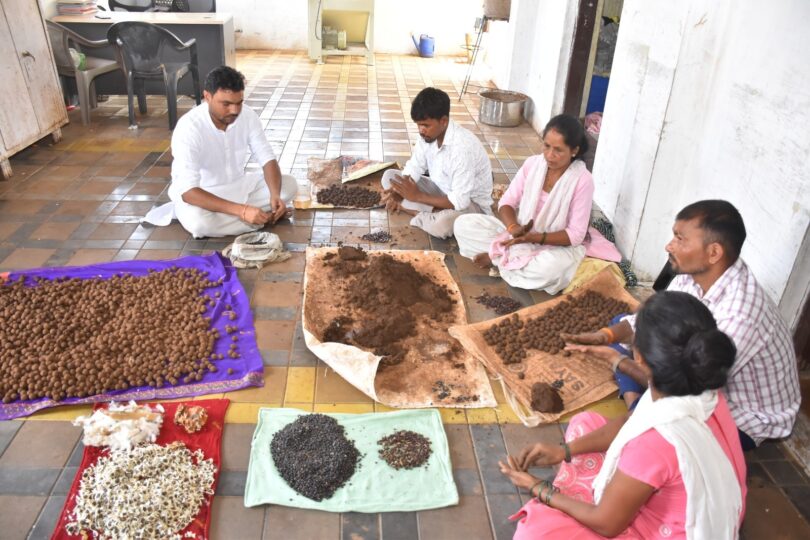
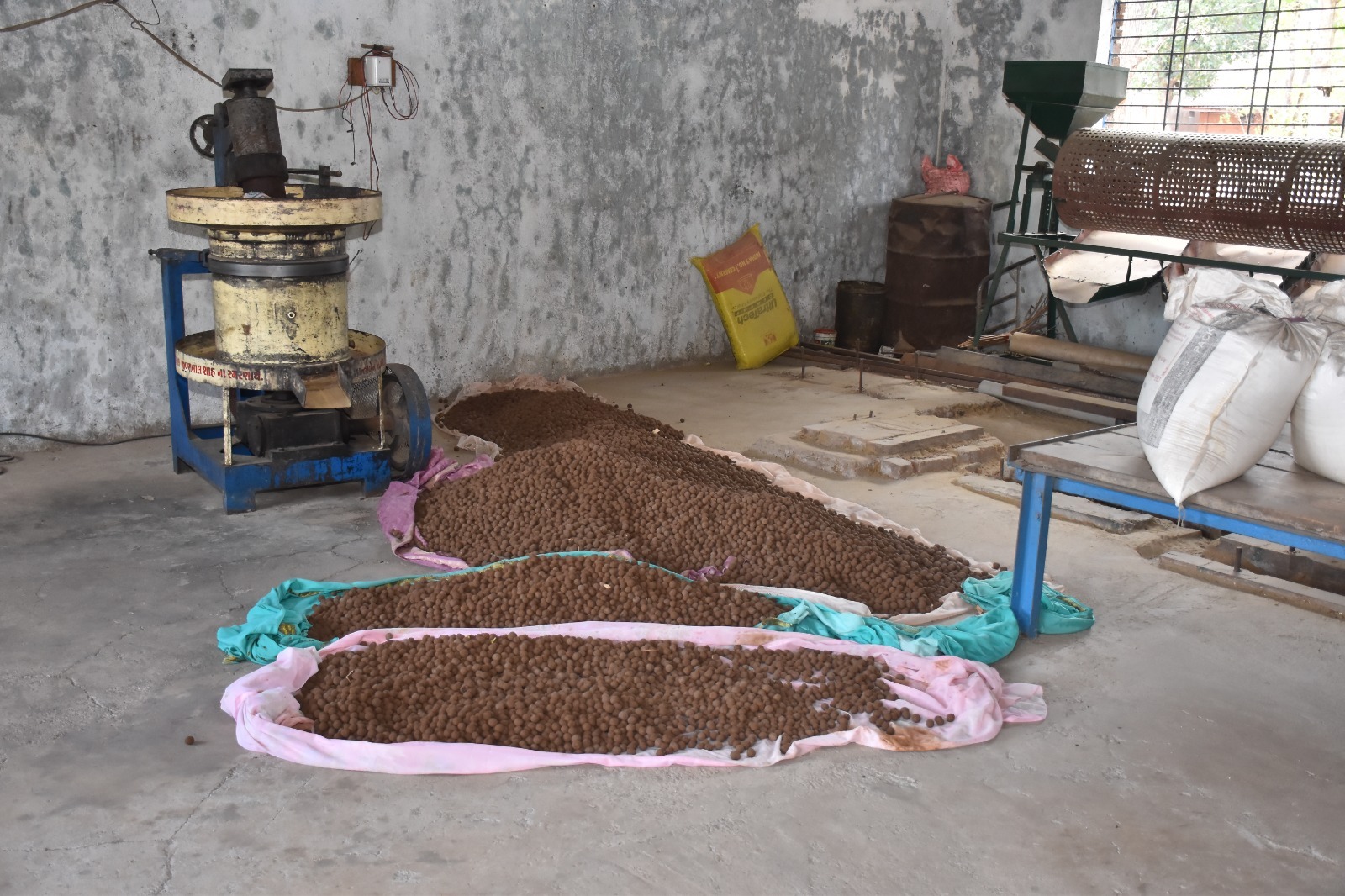
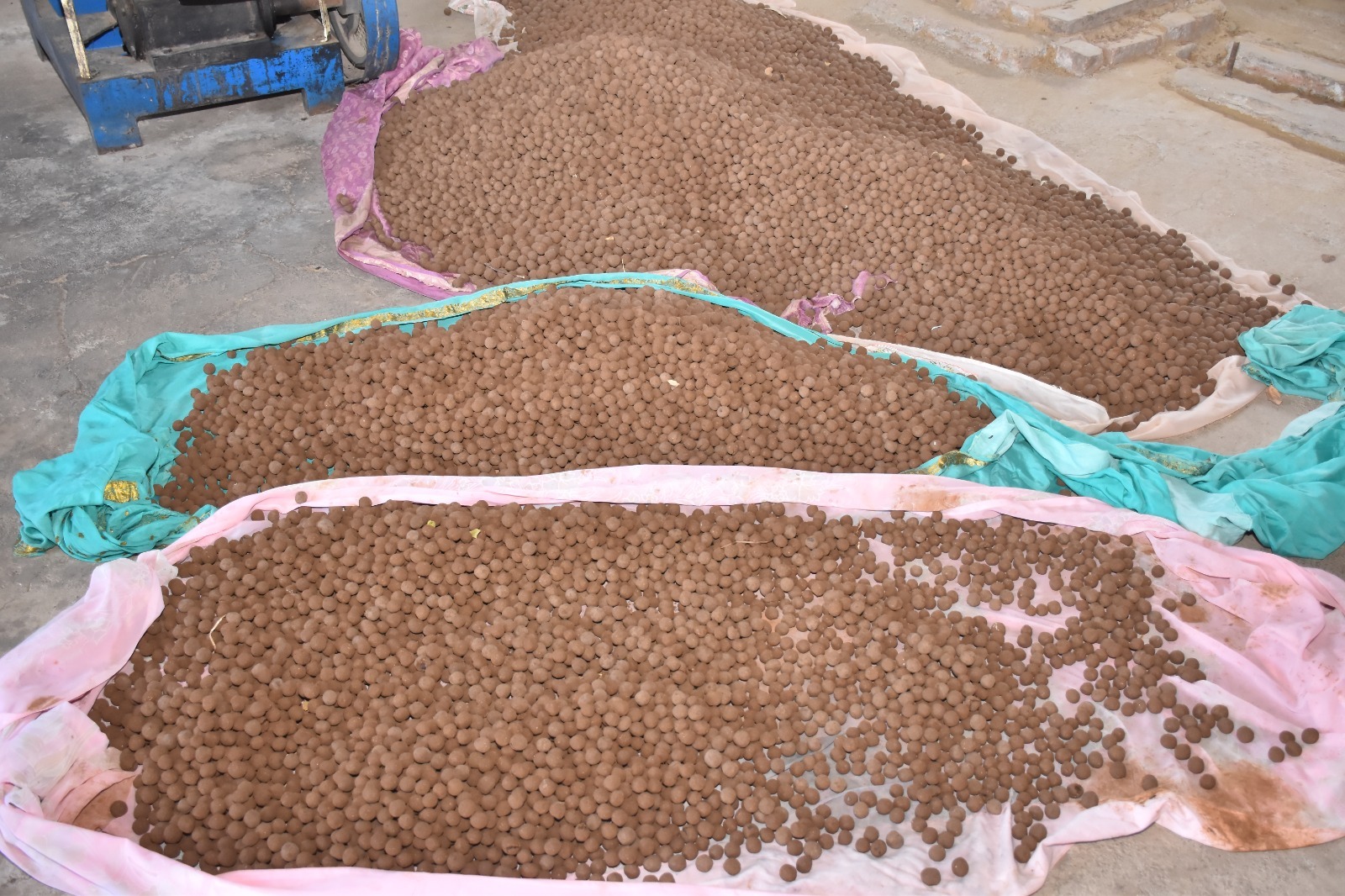
The initiative is not limited to the efforts of volunteers alone. This year, the Trust actively involved local communities in preparing more than 50,000 seed balls, fostering greater public participation and environmental awareness. Volunteers collected seeds of native and ecologically significant tree species such as khakhro, tamarind, and garmalo, which are gradually disappearing from the region. These seeds were carefully mixed with clay and organic manure to prepare seed balls suitable for natural germination.
Seed ball dropping is an environmentally sustainable and scientifically proven afforestation technique that enables large-scale forest restoration, particularly in inaccessible or degraded landscapes. A seed ball is a compact sphere made from clay, compost (organic manure), and seeds of indigenous tree species. The clay coating protects the seeds while allowing them to remain dormant until favorable conditions arise.
Unlike conventional plantation methods, seed balls do not require digging pits or manual planting. They can be scattered across open land or dropped from drones or helicopters over difficult terrains such as mountains, valleys, and dense forests, making afforestation possible even in areas where human access is extremely limited.
The technique offers several ecological and practical advantages. The protective clay layer shields the seeds from birds, rodents, and other predators, while the organic manure provides essential nutrients required during the initial stages of germination. The seed balls remain intact on the ground until the monsoon rains soften the clay, allowing the seeds to germinate naturally and develop into healthy saplings. Compared to conventional plantation methods, seed ball technology significantly reduces labour, time, and cost while enabling large-scale greening efforts with greater efficiency.
At its core, seed ball technology is a process that allows nature to regenerate itself. Human intervention is limited to delivering the seeds to suitable locations, after which natural processes take over. The initiative led by Neelambhai Patel and the Lok Mangal Charitable Trust stands as an inspiring example of how community participation, indigenous biodiversity, and modern technology can come together to revive disappearing forests and create a greener, more sustainable future.
Taking Greenery to New Heights: Dharampur’s Neelambhai Patel Leads a Unique Green Revolution with 50,000 Seed Balls Dropped by Drone